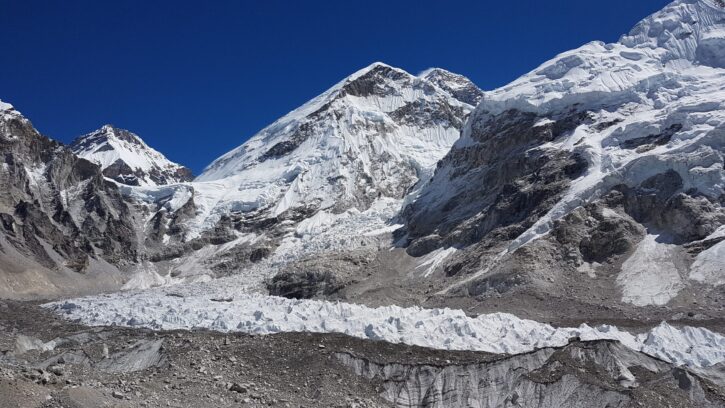
Trekking in the Himalayas is beautiful, challenging and very satisfying. More so are multi-day, high altitude treks that come with their own shares of challenges – followed by a whole new outlook on life. Snow-treks are a different story.
Most treks are undertaken in a group, while it is not uncommon to go solo.
But no matter the type of mountain trek, it is important to understand that mountains are not just about trails and view points.
Mountains have their own language – be it technical, general or to define sickness and understanding it means being able to explore it responsibly.
Understanding the mountains
Take on the mountains like a pro! You don’t want to look like a novice (or a trek-illiterate) when your trek organiser/guide shouts out an instruction, do you?
So the more you know the language of the mountains, the more you understand it and this gives you the confidence to explore the terrain better. You can never be prepared enough – and sometimes it becomes important (read crucial) to follow instructions when negotiating certain sections.
Knowledge makes you a better trekker and often keeps you safe. Every trail has a story, and every field has its own so-called technical or standard terms and knowing them make it easy to communicate. These terms overcome language barriers – and every trekker must be aware of them.
I have listed some commonly used trekking terms below.
But first, let’s break the myth that hiking is the same as trekking or even trekking the same as mountaineering. This is a common misunderstanding. The only thing in common to the three is that each of them involves walking in nature!
Breakdown of categories
- Hiking: This is the least dangerous form of walking in the mountains involving 3-4 hours of day-long activity. Usually being referred to as one-day hikes, the trail might not be difficult and it does not require the use of any technical equipment.
- Trekking: This is more difficult or dangerous than hiking as it involves staying in the mountains for 2 or more days. Typically, trekkers halt at night and continue walking the next, until they reach the top and then back.
- Mountaineering: It usually begins where the trekking ends, to climb really high peaks involving technical climbs and equipment. It is the most dangerous of all the 3 activities. Skills and prior technical knowledge are required.
Now, that we are clear about what is trekking, let’s see what the terminologies of the trekking world are. For better understanding, we have divided them into categories of where on the trek one can encounter them.
Trail Lingo in the Himalayas
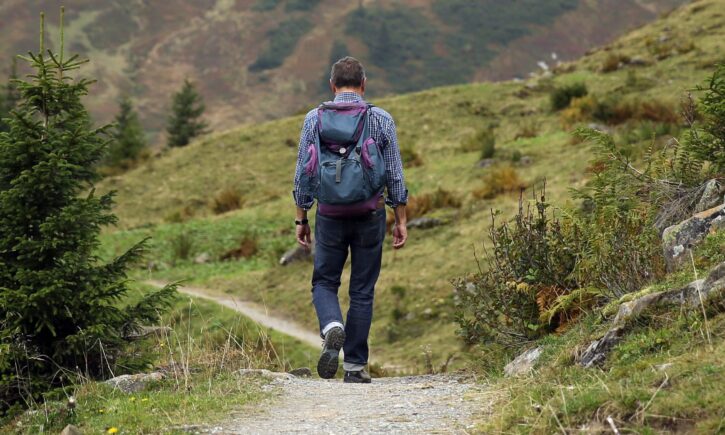
Trekking in the Himalayas is great fun and a greater challenge. The trails are challenging, there are several untrodden paths and hole in the ground for toilets.
So why not make it easier on yourself by learning a few words that you are likely to hear every day of your trek?
- Bistarai Bistarai: A very famous phrase in Nepal that translates to “go slowly.” This is the golden rule for trekking in high altitudes to prevent altitude sickness.
- Thik cha: The universal Nepali phrase meaning “it’s okay” or “I’m fine,” commonly used when checking in or replying to greetings.
- Dal Bhat: The staple energy meal of the Himalayas, consisting of lentil soup, rice, and vegetable curries.
- Namaste: Commonly heard term used to say ‘hello’.
- Chiya: Tea (often served as rich, milky, spiced tea).
- Tato Pani: Hot water. A lifesaver in freezing teahouses and great for refilling insulated bottles.
- Khana: Food or meal. (e.g., Dal Bhat, the famous lentil and rice dish).
- Kati Ho?: How much is it? (helps when trying to buy something or booking a room)
Natural Mountain Terms
When you trek, you are witnessing nature at its best. The mountains especially have their own classifications and terms, understanding which will make your trek fruitful.
- Avalanche: When huge slabs or amounts of snow slide down a slope causing disasters. Avalanches are extremely dreadful.
- Cairn: A man-made structure formed by laying stones one above the other. They are used to mark the route and give directions. These cairns are usually found next to prayer flags along the trails.
- Col: A gap between two high peaks or a passway that separates two mountains. The most popular col is South Col on the Mt. Everest. It is not the same as the past. It is only a drop point on the big mountain range, which lies between two mountains.
- Crevasse: Cracks in the glacier are called crevasses. These can be of any width and depth. They keep changing their position depending on the motion of the glacier. Many times they are covered with snow and hence are difficult to locate. Crevasse crossing requires the technique of rope up as mentioned above.
- Cornice: An overhang of ice/snow is called cornice. Walking over a cornice, one has to be extremely careful, the cornice may break and cause an avalanche.
- Glacier: It is the ice in motion, where the ice is flowing down. The ice is formed by the compaction of snow, which is moving downwards about the slope and gravity. Glaciers are seen after the tree line in the mountains.
- Glacial lake: Just like rivers the lakes formed due to water from the glacier form glacial lakes. Glacial lakes are located higher up, just below the mountains.
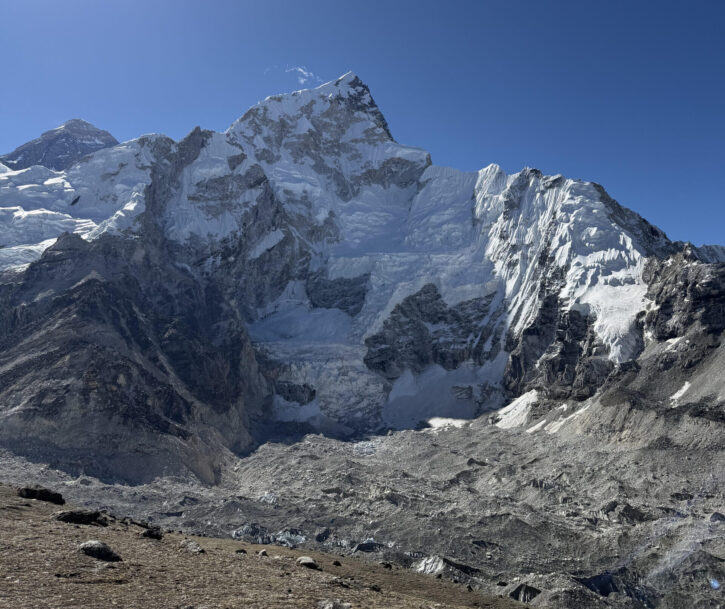
- Ice fall: When big lumps of ice keep falling due to changes underneath them is called icefall. The world-famous Khumbu Icefall (at the Everest Base Camp) is the best example. Here, the pattern of the ice pillars keep changing now and then.
- Massif: Two peaks that do not stand out and are part of one mountain range are called Massif.
- Moraines: Loose, small, rocks or boulders that are seen just before the glacier. It is a collection of the entire residue that flows along with glacier and remains back when the glacier melts. It can be seen in all of the glacier treks.
- Pass (called ‘La’): It is a traverse way to get from one mountain to the other. Many of the treks end up at high passes like Goecha La, Rohtang pass, Indrahar pass, etc.
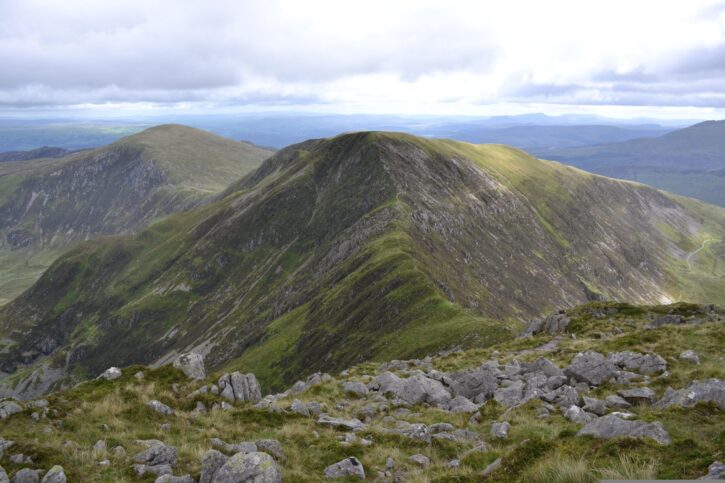
- Ridge: It is a long line extremely pointed that leads to a mountaintop. It is again not same like col, col is not as sharp as the ridge. The ridge-line is the highest line formed by the entire mountain range.
- Summit/Tibba: It is the highest point of the mountain. The summit marks the end of the trail and we return from this point.
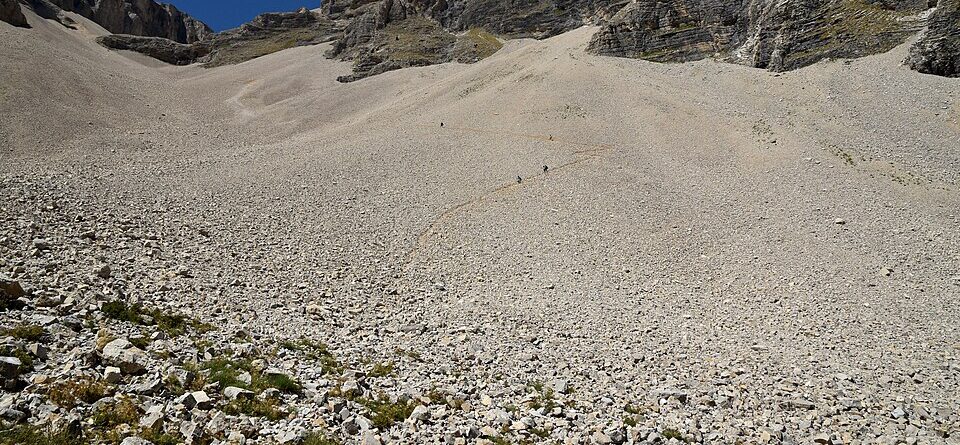
- Scree: Small, loose, broken rocks, that keep sliding down once you step on them.
- Snow-line: It is the height above which the snow remains on the peak for 12 months. The snow does not melt even in summer.
- Snow Bridge: It is an ice bridge that is formed on crevasses.
- Tree line: The highest point (elevation) after which no trees be seen is the tree line. It marks the beginning of the snow region and the end of vegetation on the mountain.
- Verglas: A thin coating of transparent ice on any object is called Verglas. They can be very dangerous and slippery. During winter treks you can find stones having lined with ice ie verglas.
What do these terms mean
- Thru-Hike: These are trails that require weeks/months to complete in one go – they’re often the entire length of a country/state/island.
- Trail Angel: A non-hiker who provides assistance to hikers, often in the form of “trail magic” (food, shelter, or a ride).
- Trailhead: The access point for a given trail, usually where one parks to start or finish their hike.
- Tramily: Trail family – made from people you meet when hiking. It’s amazing how quickly strangers can become your best friends.
- Tramping: New Zealand slang for hiking/backpacking.
- Topo: Topographical map.