Toledo has always been very high on my bucket list. So, when I boarded the bus in Madrid for my 90-minute journey to Toledo, I was terribly excited. That said, I was so taken in by the city, that I decided to stay overnight – just to see a ‘little more and then some’. Plus, the ice creams here was delicious!
Toledo is known as the city of three cultures – Jewish, Christianity and Islam, – the influences of which can be seen in its architecture, in its cobbled streets and the spirit of the local population. There is so much to see here – from soaring Gothic Cathedrals to winding alleys and museums, great views and food makes Toledo an ideal break.
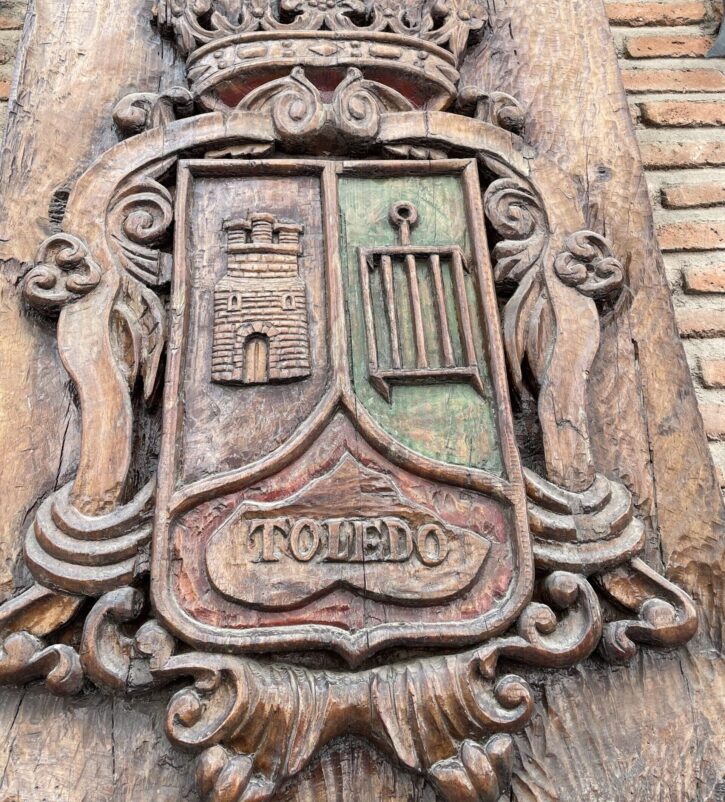
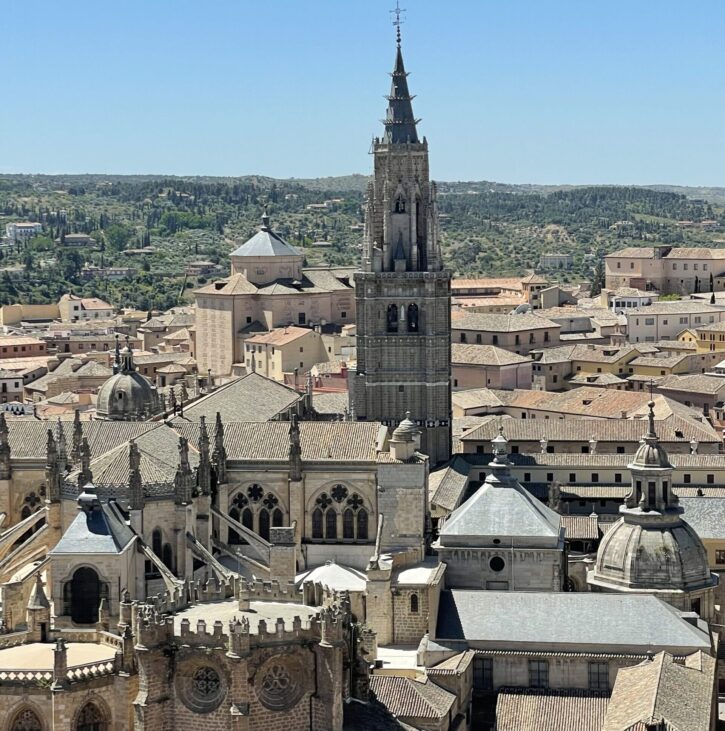
This walled city is perched atop a hill overlooking the Tagus River and is a UNESCO World Heritage Site and one of Spain’s most iconic cities.
The history of Toledo
Toledo has been inhabited before the Roman times by Celtic tribes, who were later conquered by the Roman and became a Roman town. When the Arabs conquered Toledo, power shifted to Cordoba, but Toledo would become its own small kingdom from 1031-1085.
The Castilians took Toledo in 1085, and it served intermittently as their capital for the next five hundred years. The city thrived in medieval times and was known especially for their steel swords, which is still a large part of their appeal today.
Though the city did not thrive as it once did, its stunning architecture and history has survived the test of time and it remains one of the most amazing places to visit in Spain today. It’s also a UNESCO World Heritage Site.
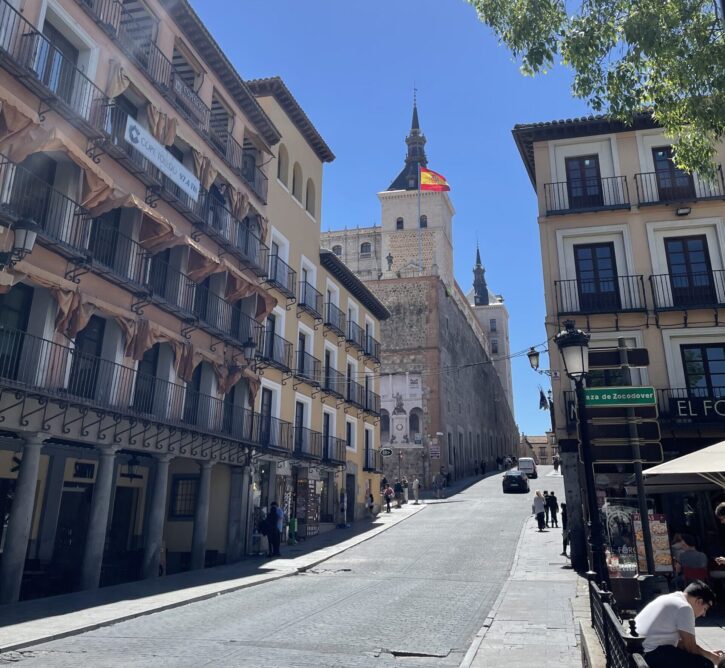
The architecture is stunning
Though Toledo’s history has not been peaceful, it’s known today for having housed Christians, Jews, and Muslims, and all three cultures are represented historically today. There are a huge number of places of worship, and this can really be overwhelming to see it all at once (especially if you are short on time.
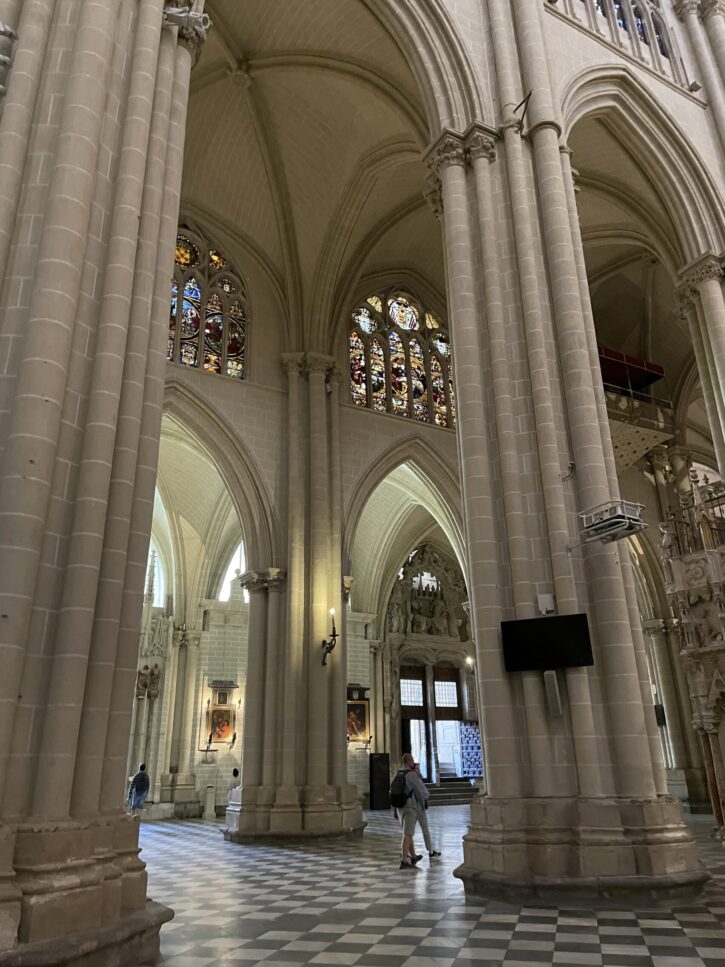
The most prominent is Toledo Cathedral. This illustrious church ranks among the top 10 cathedrals in Spain. An impressive example of medieval Gothic architecture, its enormous interior is full of the classic characteristics of the style, rose windows, flying buttresses, ribbed vaults and pointed arches. The Toledo Cathedral was built in the 13th century and contains several beautifully decorated chapels, including the Ochavo and San Blás chapels.
If you’ve studied art history, then you’ve probably heard of the painter El Greco, who moved to Toledo in 1577 and his works there are amongst his most famous. You can see one of his works, The Burial of the Count of Orgaz, in Iglesia de Santo Tome. The church itself is beautiful, but the painting is very much a highlight.
The place I recommend visiting most is the Church of Santo Domingo which holds the mortal remains of this painter. It’s very cool and creepy but worth a stop.
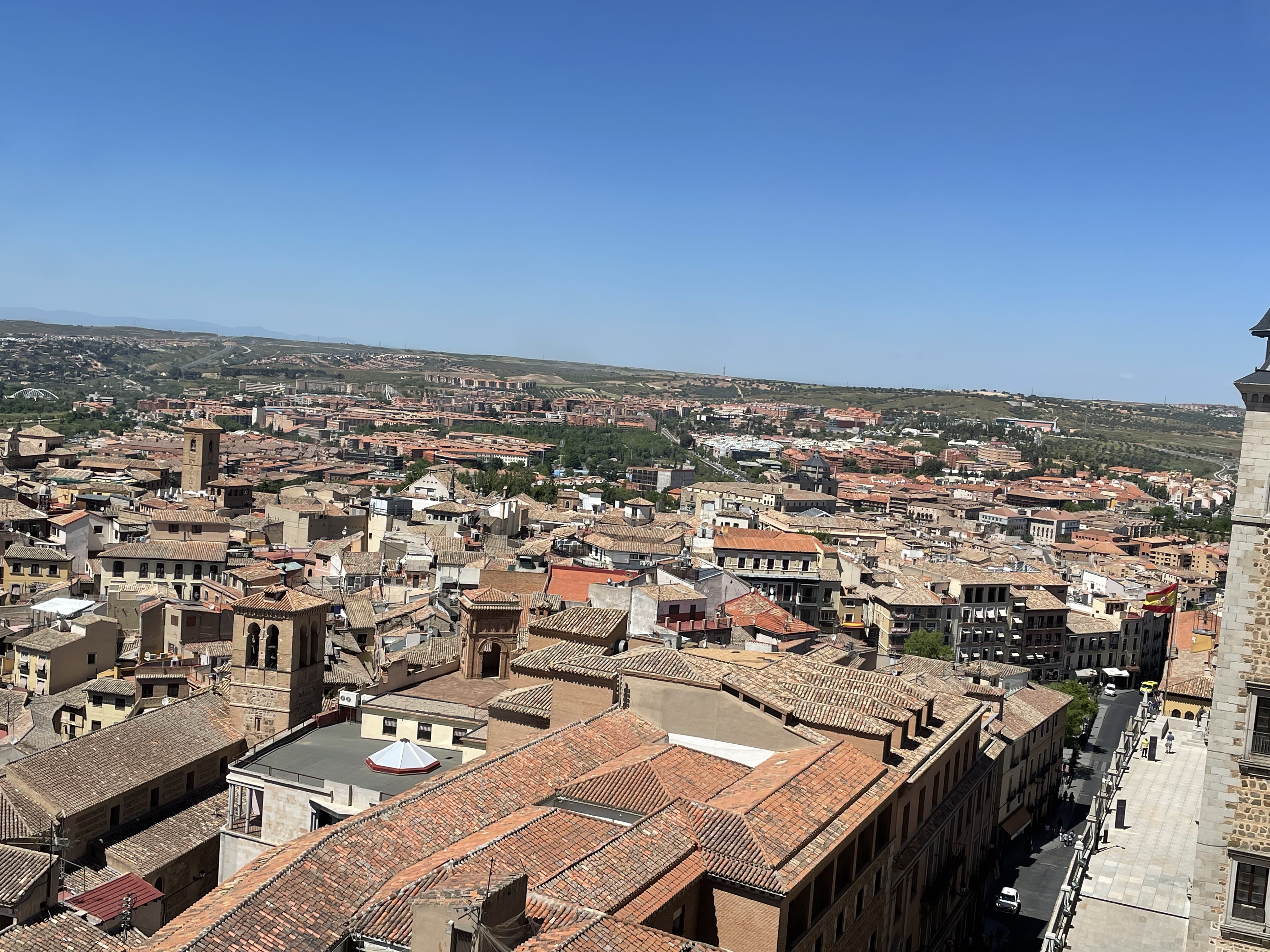
Gorgeous views to die for
One of the city’s most prominent landmarks is another must-see: the Alcazar de Toledo which was originally an Arab palace before being converted to a Castillian palace and burning down. The building today is unfortunately not as magnificent as it once was and houses a military museum. However, it is very worth going to the cafe at the top of the building. You enter to the side opposite the museum, go to the top floor, and the cafe there has beautiful, sweeping views of the city and beyond. No purchase necessary to enter. It’s absolutely one of the best places to see in Toledo and it’s free!
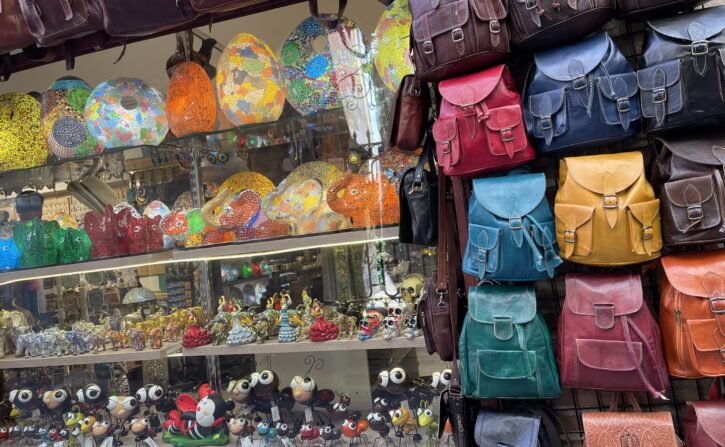
Toledo itself is quite touristy with an abundance of souvenir shops but it’s still gorgeous. With literally thousands of years of history behind it, it’s also worth taking a walking tour or having some type of travel guide. Every street is steeped in history and it’s exciting to stand somewhere and know what it is and why it’s there.
What not to miss
The monastery San Juan de los Reyes is stunning and one you need to put on your Toledo list. The sculpting is amazing. The Church of San Roman is also beautiful but more so for its frescoes. It also houses a museum of the Visigoths, but everything is in Spanish. However, the church alone is enough to put San Roman on your list. Other Christian sites include Iglesia de San Ildefonso and Iglesia de Santiago del Arrabal. Some more sites that have El Greco paintings are below.
If you have the time, I recommend visiting the beautiful Synagogue of El Transito. The detailed sculpting and woodwork inside are stunning, and there’s also a small museum on Toledo’s Jewish history. You can also visit Synagogue of Santa Maria la Blanca and the Mezquita de Cristo de la Luz.

Did you know –
- Swords for famous movies like Harry Potter and Game of the Thrones come from Toledo.
- Toledo has a long tradition of chocolate production, and there are several chocolatiers in the city that offer delicious treats.
- Toledo hosts several annual festivals throughout the year, including the International Festival of Music and the Festival of the Three Cultures.
- The renowned Greek painter El Greco lived in Toledo for much of his life and created some of his most famous works there, including “The Burial of Count Orgaz” and “The View of Toledo.”
Legends of Toledo
Like every culturally rich and ancient city, Toledo has its share of legends – here are two most popular ones.
The Legend of the Enchanted Sword
One of the most well-known legends about Toledo revolves around the enchanted sword Excalibur. While the legend of King Arthur and Excalibur is often associated with England, some believe that the sword was forged in Toledo by skilled artisans. It is said that the sword possesses magical powers and can only be wielded by a worthy king.
The Legend of the Hidden Treasure
Another popular legend tells of a hidden treasure buried beneath the Toledo Cathedral. It is said that the treasure was left behind by a Moorish king, and that it is guarded by a fearsome dragon. Many have searched for the treasure over the centuries, but none have been successful.
Useful Info
- Tickets to the Cathedral can be bought at the ticket office located opposite the Puerta Llana gate in Calle Cardenal Cisneros.
- Toledo is easy to get to from Madrid by train, (35 minutes), bus (90 min) or car. The train is a good option, but you’d need to buy the tickets early. The line is solely operated by RENFE so you do not have other options.
- Buses leave from Plaza Elíptica, which is not in Madrid’s city center, so plan your travel accordingly.
- In Toledo, both the bus station and train station are located next to the other – but getting to the city involves walking uphill. Exit the station and walk right – today, there are escalators taking you all the way up to near Plaza de Zocodover, which is the center of the city.
- If you prefer not to walk, there are three bus lines that stop in front of the train station and take you to Plaza de Zocodover: Lines 61, 62 and 511. Alternatively, you could go on a organized tour from Madrid.