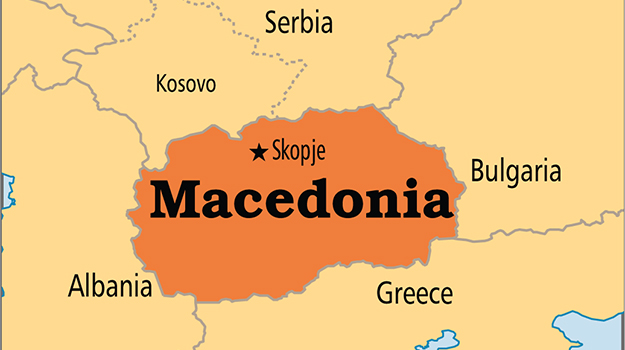
On the morning I arrived in Skopje, the capital of Macedonia, I knew I’d done something right. The six hours bus ride including border checks at the Serbian border was smooth and as beautiful mornings go, it was one of the finest. I walked into the cold morning, smiling. The moment demanded it.
Promptly I hailed a taxi and directed it to my hotel (Bushi Resort and Spa for me, yes sir!) nestling between the 6th century Kale Fortress and the Old Town, for I saw no sense in lounging about the bus station photographing a grey skyline so early in the morning.
By 7.30am I was ready to explore the Fortress that I was told, was always open and free to visit. It was cold, yes, and there were chances of rain as well, but I wasn’t keen on wasting any time. I have always believed that mornings are best to explore a new place. It was the quiet and the clean that fascinated me immensely.
The Kale Fortress was a short walk from the hotel and apart from me, there were three other people there – and all three wielded long handled brooms and swept away the damp leaves from the pavements. I walked along the wall of the Fort, breathing deeply and simply enjoying the feeling of being there – in a country I had only recently thought about visiting.
From atop the ancient Fort walls I saw the beautiful Skopje slumber – fanned by the national flags fluttering in the wind accompanied by gentle rain showers and of course, the chill that came with it.
I was wet, but deeply in love.
The Macedonia Square
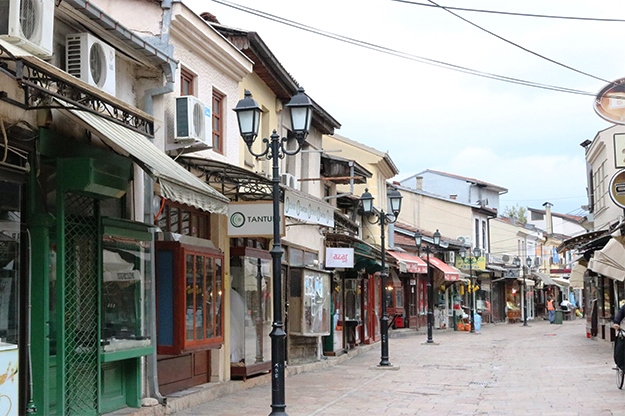
Following a satisfying breakfast of Macedonian cheese, eggs and bread (there is something about bread in Europe that is so different and tempting!), I walked through the old town to work off the cheese, admiring old and sometimes crumbling houses before arriving at the new Macedonia Square (the Town/City Centre. The contrast was stark, and I stared till somehow the reality of Macedonia started to make sense.
Twenty-five years ago, Macedonia had peacefully won independence from former Yugoslavia. But how did that tie in with the hugely expensive makeover of the Square that I stood staring at?
Well, the multi-million-euro makeover that gave the city gigantic statues was intended to help erase every trace of socialism during Yugoslavia. Despite the huge costs of reshaping the otherwise modernist city (rebuilt after the 1963 earthquake) the idea worked and today the Macedonia Square is a hub for tourists and residents alike, boasting of museums, government buildings and National Theatre restructured in the baroque style. Cleary, rebuilding was Macedonia’s specialty.
I was particularly fascinated by one statue – of a giant horseman, which I was told was the Warrior on a Horse (also called Alexander the Great in hushed tones). A fountain and water-spouting lions surrounding the base of this statue completed the magnificent creation. I wasn’t sure what it was meant to represent, but it was impressive alright, that and the forty other monuments and sculptures installed around. Here, cafes and restaurants abound – packed to capacity, buzzing with a very positive energy, the kind that is endearing. The area buzzes with nightlife as well as being a hot spot for shopaholics as the city’s two biggest malls are located in the vicinity. Mind, the nightclubs play loud and peppy music late into the night and for sure, you won’t find any of those nightclubs empty! Macedonians do love night-outs and music, and of course food!
I walked down the road directly in front of this statue till I came across the House of Mother Theresa. The Saint of Calcutta was born here – in a small house in Skopje, although she was of Albanian ethnicity. Macedonians are very proud of this fact generous in saying that “Mother Theresa belongs to the world.” And as an Indian, of course, I was proud that Mother Theresa had chosen my country for her home till her death.
Churches and museums
Being a recently converted enthusiast of European history, I was delighted to find many churches and museums here and as a typical Eastern European country, Macedonia too had a fair share of historical monuments, mosques and churches still in existence, many of it in Skopje. Also, many of the religious houses were within walking distance of each other. Skopje is a walkable city, no doubt and wearing sensible flat shoes is helpful, although it is not uncommon to see women in high heels balance walk the cobbled streets without concern.
Of the most notable mosques was the Mustafa Pasha Mosque, an Ottoman-era Mosque in the Old Town that stands intact centuries later and contains the grave of the Pasha’s daughter. I particularly loved the pretty rose garden that for no reason reminded me of Frances Burnett’s Secret Garden!
With this happy thought I walked down to the Old bazaar district, the center of life during the Ottoman rule beginning in 1392 and continued for nearly five centuries, munched on some warm and crusty burek, a legacy of the Turks before walking up another steep alley, past coffee shops and bars pouring onto the streets towards the Church of the Holy Saviour (Sveti Spas Church) that had one of the most fascinating and intricate iconostasis and a 17th-century fresco that I’d ever seen. The cheerful courtyard houses the grave of Macedonia’s greatest national hero Goce Delchev and it is built a few meters into the ground for when the Turks ruled, they forbade a church to have a dominant exterior. Being in Skopje alone made me a little wiser than I had come – in a matter of few hours. Here the reality of the Ottoman empire and the conquest of other rulers in history began to sink in – I couldn’t imagine how much time had changed or shaped the character of this beautiful country but the evidence of these conquests were everywhere and hard to ignore.
As the evening wore on, I enjoyed an early dinner of Macedonian-style chicken and a large portion of shopksa salata, a local favourite right by the bustling Square, watching the fountain change colours. It was said that a quarter of the country’s populating lived in the capital city and at that point it did occur to me that it could be true! On the other side, the Triumphal Arc that was once white, watched. Once white, I say because in the present it was smeared with colours believed to be the work of unsatisfied residents who didn’t think the government should have spent so many million euros in decorating the square and demanding their fall.
The giant cross on Mt Vodno
The next morning I headed towards Mt Vodno to see the Millennium Cross towering over the city. In fact, the cross was easily seen from every corner in the city and is a popular spot for families and tourists looking for a day break. For the adventure lover, the cable car holds no appeal and from the swinging car I saw fitness enthusiasts sweating their way up the steep incline. The cross itself is the fifth biggest in the world and stands 66m tall and was constructed to celebrate 2000 years of Christianity in the country. From up here on a clear day, the city of Skopje looks like a beautiful mix of the old and new rising into the skies – but only just. Up on Mt Vodno, you can never say when it gets misty. I only managed to get a selfie before everything turned white and cold. The rest of the time up there, I spent nursing Oregano tea and hoping in some way that the moment would last forever.
OUTSIDE SKOPJE
Matka Canyon: On Day 3, I headed towards Matka Canyon less than an hour’s drive from Skopje. Following the narrow path from the trailhead, past rocky overhanging and trees to arrive at one of Macedonia’s hidden gems – The Matka Canyon bisected by the Treska river. To say it was beautiful would be an understatement. Picture this – a womb-shaped water body with clear blue waters surrounded by pointy and jagged cliffs and trees and silence broken by occasional sound of bird or falling leaves…and of course the sound of oars as the brave explores headed towards Cave Vrelo which is among the deepest caves in Europe and has some jaw-dropping stalactites. I didn’t see this of course – it was cold! Instead I sat in the coffee shop by the water and drank coffee, another Macedonian staple. I was getting used to the good life.
Coloured Mosque: From here, I headed to Tetovo (renowned also for its beans), navigating heavy traffic before arriving at Sarena Dzamija mosque (the Coloured Mosque). This was indeed a rare find for three reasons. First, it was commissioned to be built by two sisters, it did not have the standard outside dome typical of a mosque and it was coloured! Fancy that! The inside was a riot of colours while the on the outside, it looked like playing cards placed next to each other!
Macedonia was definitely not what I had ever imagined it to be and I was more than convinced that I had accidentally arrived one of the most beautiful and understated eastern European country.
Highlights not to be missed
1. National Art Gallery, formerly a hammam
2. Stone Bridge over the River Vardar
3. The Museum of Macedonian Struggle
Must try delicacies
- Shopska Salata: Lots of chopped cucumber, tomatoes, olive oil and of course, grated cheese. Every meal is accompanied by this sumptuous salad.
- Burek: A flaky and layered snack full of cheese and is the legacy of the Turks
- Tavce Gravce: White beans cooked in local spices
- Kebapi with ajvar: Kebabs made with combination of ground meats and served with ajvar – a roasted red pepper paste.
Other useful info
Visa: Macedonia is NOT part of the EU, although if you have a valid Schengen or US visa, you can get visa on arrival for most countries.
Local currency: Denar
Airport: Skopje Alexander the Great Airport
Credit Cards: Accepted everywhere