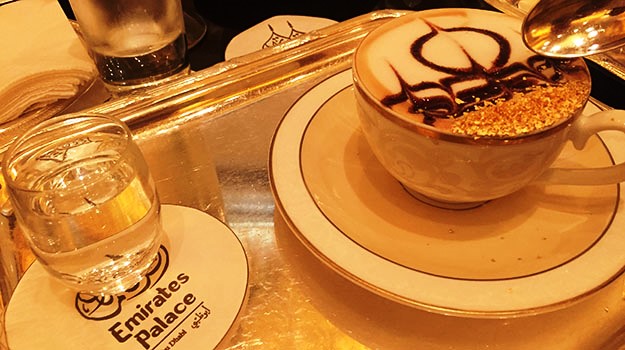

While it may seem that I obsess over coffee shops all over the world, it is also true that coffee shops all over have provided solace, space and fuel to thinkers, writers, poets, travellers for a very long time. There is something special a place that allows you to feel, to take in, to observe. For me, there is just enough buzz to keep me focussed and watching people provides fuel to my writing.
Also, as a rule (or call it fascination), I make sure to visit as many iconic cafes in every city I visit. While some do not live up the hype, others surpass it. But none disappoint. I am not an expert on coffee, but i do enjoy a good cuppa black but more than coffee drinking it is knowing that I am sharing space with some fine minds – though decades apart and that just makes me want to dance.
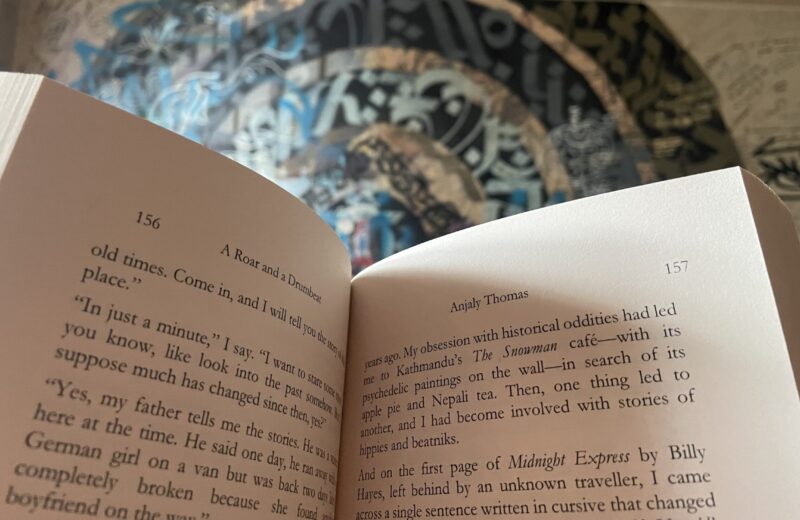
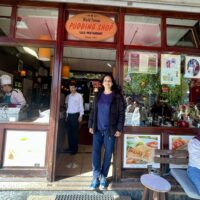
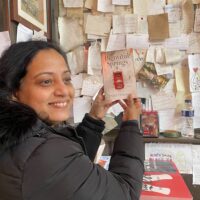
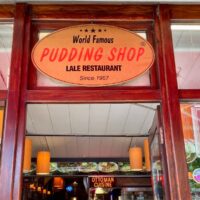
The Pudding Shop in Istanbul finds a mention in my recently released book A Roar and a Drumbeat and while it was not released when I last visited, I made sure I took my earlier book to be photographed there. Its just my way of paying my tribute to an institution that somehow shaped the path for my book (past, present and any future books I might write).
I am not going to write a review of The Pudding Shop – but I will say this. I am sure vibe that defined the hippie days was missing. On three of my visits here, I had the feeling of something missing – perhaps I was looking for hippies (or at least true lovers of adventure) seeking refuge here – or waiting for a message from a fellow traveller, scanning the boards for information or ordering a cheap pudding… perhaps I was missing a time of life I knew of from reading books wanting, even for a minute to be a part of it…
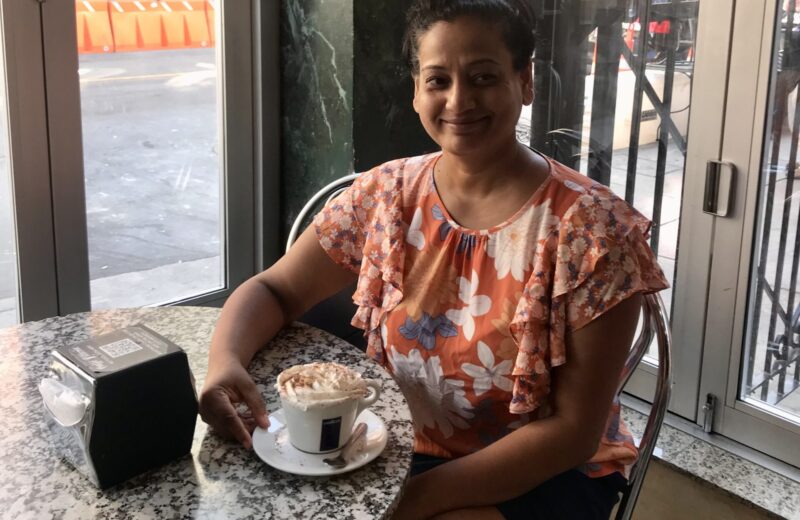
Today, the Pudding Shop has changed its business model – serving buffet lunch and dinner which I tried and didn’t care much for. I didn’t dare try the sutlac I did a few years ago – instead ordered a coffee with trepidation. Like I assumed, even the coffee tasted different.
A chapter from A Roar and a Drumbeat
The Pudding Shop.
Naturally, I have no intention of eating any pudding. I mean to uncover the romantic origins of the Hippie Trail and what itchy-footed travellers did before flights became cheap and plentiful.
The tram from Karakoy whizzes past, heading to the Golden Horn to the other side. It is, without a doubt, the quickest way to get around the city if one can handle the jostling and warm bodies pressed against each other. There are moments of alarm during the journey when the tram threatens to go off the track at the bends.
At Sultanahmet, the most popular stop on the ride, the tram halts and empties out. My destination in the middle of Sultanahmet Square, in sight of the two most famous buildings in Turkey—Hagia Sophia and the Blue Mosque—is a tiny shop selling overpriced food. I walk briskly towards it. Every step closer takes me back four decades, when there was less hustle and bustle around the place. I imagine people in baggy pants, flowering skirts, and mismatched loose clothes; people with unwashed hair and beards—people from Jack Kerouac books and the 1968 Beatles trip to Rishikesh, India.
I am standing here, as though waiting for a passage to Nepal via Afghanistan.
A young man in a white apron comes to stand by my side. He is smiling conspiratorially. He knows what I am thinking. His manner is that of an usher and less like a waiter.
“You are wishing for the good old times, yes?” he says. “I also sometimes wonder what it was like—the good old times. Come in, and I will tell you the story of this place.”
“In just a minute,” I say. “I want to stare some more, you know, like look into the past somehow. But I suppose much has changed since then, yes?”
“Yes, my father tells me the stories. He was a waiter here at the time. He said one day, he ran away with a German girl on a van but was back two days later, completely broken because she found another boyfriend on the way.”
I follow him inside and find myself a table by the door. All around me is the sound of traffic and conversations of people waiting to get inside. Two girls with blonde hair are posing by the noticeboard.
Business is booming at The Pudding Shop.
My sütlac, a local rice pudding, arrives and is followed by coffee. The waiter urges me to try the chicken pudding next, a dish he says is hugely popular. I decline. I settle for chocolate pudding instead, provided he never brings up chicken and pudding in the same breath again. I couldn’t imagine chicken being cooked in milk and sugar, no matter how much I tried.
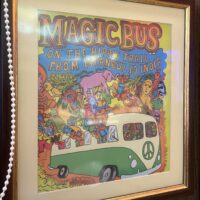
The Pudding Shop has an interesting backstory. It began as the Lale Restaurant in 1957, a venture by two brothers İdris and Namık Çolpan, before gaining a reputation in the 1960s as a meeting place for hippies and other travellers overlanding between Europe, India, Nepal, and elsewhere in Asia. I had heard of The Pudding Shop in a café on Nepal’s Freak Street a few years ago. My obsession with historical oddities had led me to Kathmandu’s The Snowman café—with its psychedelic paintings on the wall—in search of its apple pie and Nepali tea. Then, one thing led to another, and I had become involved with stories of hippies and beatniks.
*
The name The Pudding Shop replaced its original name because foreign travellers who could not remember the name Lale Restaurant but remembered the excellent selection of puddings sold there called it so.
“In those days, people ate, sang, and played music and did not care how they looked or how the hotel looked. Today, people either come for photos of the place, for the pudding, or the love of travel. They sit with headphones, staring at their mobile phones, smiling at the screens, and sipping coffee without feeling,” the waiter laments.
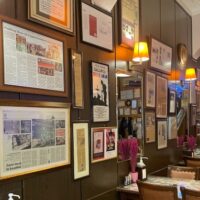
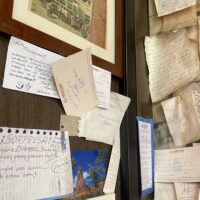
“In its early years, The Pudding Shop offered information on transportation to Asia and tourist information on Turkey freely to the customers, who comprised of tourists. Back then, they were simply called hippies. The owners put up a bulletin board inside so that travellers could schedule rides with their fellow travellers and communicate with friends and family members. That is how we became famous.”
He beams with pride.
“You must see our famous message from Megan to Malcolm apologizing for the ‘business down in Greece.’ Today, we hide our messages on WhatsApp. Oh, for the times so simple.”
I want to leave a message, too, but one look at the other customers diminishes my enthusiasm. Everyone is engrossed in their phones.
I sip my coffee, trying to live in the moment, and be mesmerized by the Blue Mosque and Hagia Sophia in the distance. Unfortunately, this café didn’t exist in the time of Hemingway—or the dictionary would possibly have a new word.