
In my quest for the Sunken City, I discovered four things – and one of those burst the Santa Claus myth.
That said, Kate Clow, a British author and history buff set me up on the Lycian Trail in Antalya. Seven hundred and sixty kilometers long, this trail starts in Konyaalti near Antalya and ends in Fethiye and can be done on foot over a month, or in a few days on wheels. This trail passes through several Lycian towns and UNESCO World Heritage sites.
Click here to read this article on Khaleej Times.
The Lycian Trail
My plan did not include hiking or driving through every town but seeing the sites between Antalya and Demre (ancient Myra) – the highlight being the Sunken City of Kekova. SunExpress flight brought me to Antalya – my first discovery was of this budget airlines from Dubai and upon arrival, Huzur, my driver/guide and a former archeologist whisked me off along the D400 highway with sweeping views of lush forests and dazzling blue sea.
This route considered to be one of Turkey’s most beautiful roads.
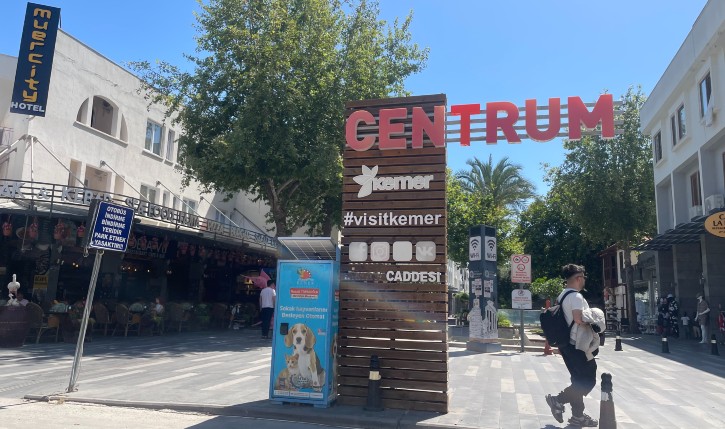
Upon reaching Kemer, I made the second discovery. In this side of Turkey, it is important to have your own transport, an advance booking and deep pockets. Outside the city of Antalya, there is little chance of finding a budget friendly accommodation – especially in Kemer, the poster boy of the Turkish Riviera today. After looking in vain for the famed Turkish Pansiyon (Turkish style B&B) in Kemer, I ended up at Club Med, an all-inclusive hotel bordering this touristy town. At least, I didn’t have to worry about food.
Fortunately, this also meant I was rather close to Phaselis, Olympos and Demre, my final stop.
I spent the evening dipping my feet in the cold blue Mediterranean, looking forward to Phaselis, my first stop in the morning.
Phaselis and Olympos Huzur, the guide and I bonded over our interest in ancient ruins. When we reached Phaselis, we became thick friends.
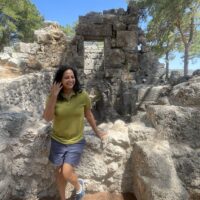
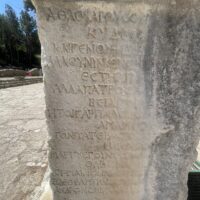
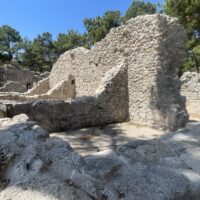
Phaselis, backed by magnificent mountains and surrounded by the clear waters of the Mediterranean Sea is an old sea-port city dating back to the 7 th century BC. It was also the only city located next to the sea. Most ruins around Turkey are located inland.
Walking through the ruins, I did get a feel for how daily life was, when the city was in its prime. The long waterway canals, round theatre and ancient agoras were carefully planned and built around the main harbor street that gives way to views of the crystal blue sea and golden beaches.
Technically, no guide is necessary to explore Phaselis, everything is marked, and information boards are everywhere. But every small details helps.
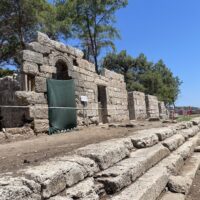
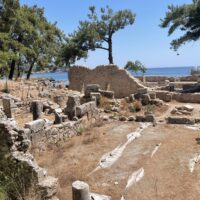
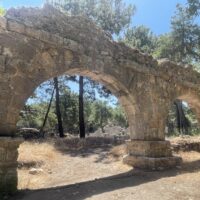
My next destination was Olympos, about thirty minutes’ drive away from Phaselis. Enroute, we passed Mount Chimaera, also known as Yanartaş, sitting majestically on the turquoise coast. There is a legend attached to the eternal flames coming from the mountainside that involves a mythical hero named Bellerophon and a dragon named Chimaera, part lion, part goat and part serpent. But the real reason is the natural gas seeping from the earth and is said to be burning for thousands of years.
We reached Olympos closer to noon. Olympos was the second most important harbor city in the region. Founded in the Hellenistic Age, it eventually became one of the members of the Lycian League before being conquered by Romans and becoming an important part of the Roman province.
Some parts of the site were closed for renovations (as with Phaselis) so it took me about 45 minutes for a walk through. Over a late lunch in Finike, another seaside town with forlorn beaches and orange orchards, I discovered Finike’s thin-skinned and juicy
oranges, a major export of the region. The oranges of Finike are said to benefit from the climate and fecundity of the soil, but I left without getting a chance to taste them.
From Finike, the drive to Myra (Demre) is stunning – the blue Mediterranean Sea nudges the cliffs on one side and mountains rise into the skies on the other. The road winds around the mountains and passes small bays and lagoons.
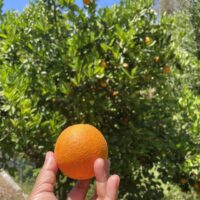
Finally, in Demre, the archeological wonderland of Antalya Province, I found what I was looking for – a Pansiyon run by a kind lady whose primary joy was to treat her guests to oranges from her garden. “Not like Finike oranges, but better,” Huzur translated her declaration.
I went to sleep dreaming of oranges.
The Sunken City of Kekova
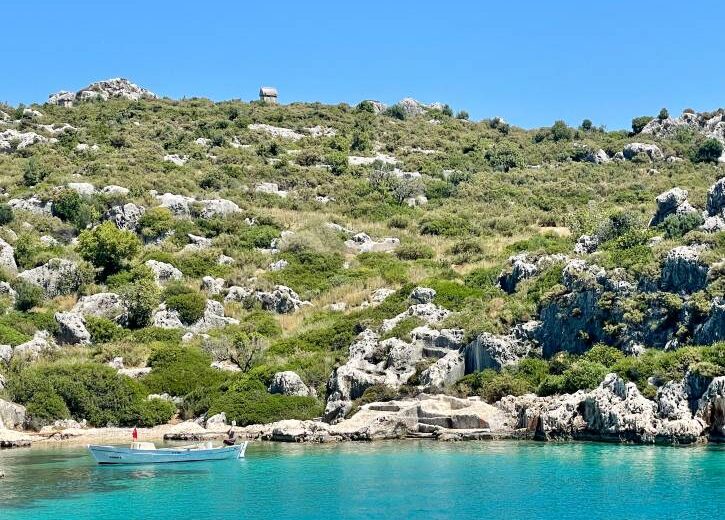
We reached the Demre Harbour early armed with oranges from the Panisyon to be greeted by a huge sea turtle making its way around the Mediterranean. About half hour later, we arrived at the stunning underwater ruins, now partly submerged 6m below the sea – hence the name Batık Şehir or Sunken City.
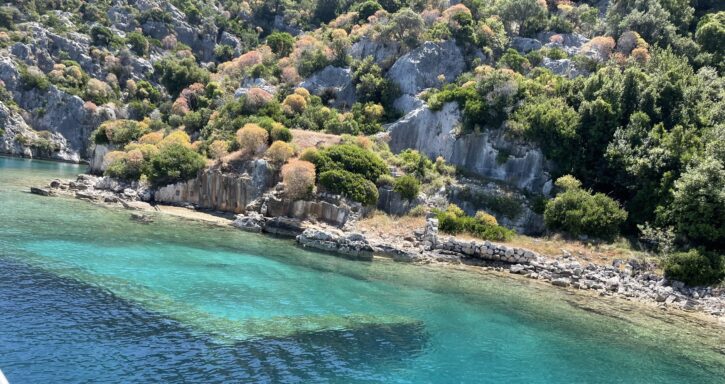
Kekova Island is no longer inhabited – and it is only possible to explore this protected island by water. Once a thriving community, it was completed destroyed by an earthquake. Today only parts of few walls, water channels, stone staircase descending into the water, royal tombs and boathouses are evidence that this ancient city ever existed. Under the water are remains of terracotta pipes, amphorae piles, stone foundations and rock-cut staircases.
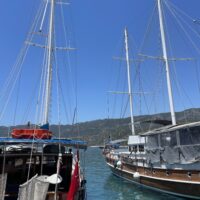
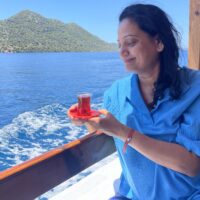
The biggest draw here is not just the glimpse of the Sunken City, but the crystal-clear waters ideal for kayaking. Considering my time constraint, I had to decide against kayaking or go on glass-bottom canoe ride over the ruins. The island’s popularity is also thanks to its proximity to the Lycian Way hike.
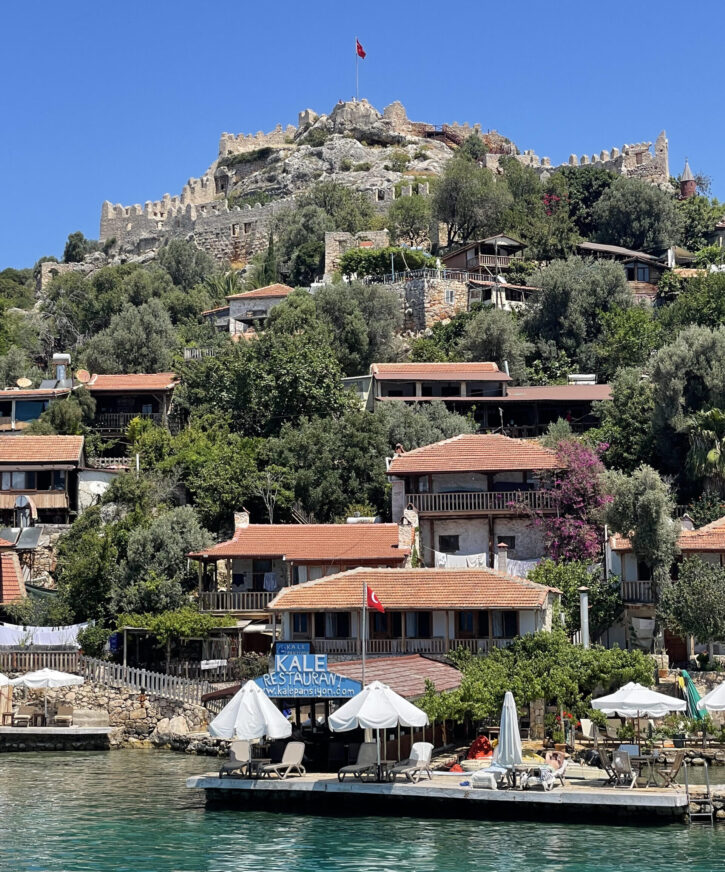
The region is full of history dating back to the Lycian and Roman times, including the ancient cities of Simena (Kalekoy) and Ucagiz. Across from Kekova Island is the historic town of Kalekoy, sitting on the mainland, but accessible only via water. Pretty restaurants line the shores and Lycian sarcophagi jut from the water, offering a glimpse back into the fascinating burial practices. While much of Kekova is now buried under water, Simena Castle (Kekova Castle), stands proudly atop the central island offering majestic views of the surrounding area.
Saint Nicholas, the real Santa Claus
Back in Demre, we headed to the UNESCO World Heritage church of St Nicholas, now a museum, where I make my final discovery – that St. Nicholas who was the bishop of Myra (now Demre) was the real Santa Claus, born in 370AD in Patara, Lycia in the present-day Turkey.
I took in that information silently. I had no reason to dispute that theory but walking through the church with history oozing out of its old walls convinced me that there was truth in what Huzur had just said. The church, with its frescoes covered walls holds the tombstone of the saint.
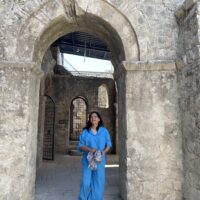
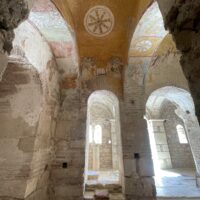
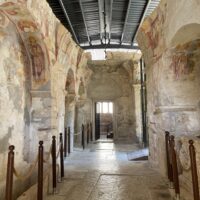
It is a historical marvel that bridges centuries of faith and folklore.
Legend has it that after the death Nicholas, a wealthy Bishop, stories of his gift-giving grew which later formed the basis of the popular character Santa Claus. The most famous story Saint Nicholas has been immortalized by the story of the three sisters.
The story goes that the father did not have enough money to pay their dowries and wanted to sell them into servitude. Three times, Saint Nicholas secretly went to their house at night and threw a bag of money inside. The man married off his daughters with the money. On the third visit, the man saw Saint Nicholas and thanked him for his kindness. Some gold fell into the socks drying by the fireplace. This is why there is a tradition to hang stocking by the fireplace.
The Lycian Tombs of Demre
My last visit of the day was the ancient city of Myra, close to the city centre to visit the Necropolis and an ancient Roman theatre. Entering the gates, I was greeted by Medusa head, a device used to avert evil in the ancient times – and quite clearly serving its purpose to this day.
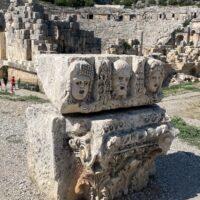
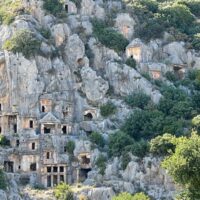
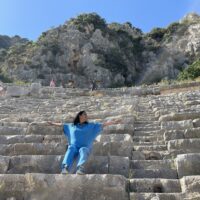
The exact origins of Myra’s existence remain unknown, although parts of its ruins are thought to date back to the 5th century B.C.
It is not possible to walk up to the tombs and they largely remain out of reach. The cliffside necropolis stands above what later became a prosperous Roman city with a theater, (theatre of Myra), that could seat least 12,000 spectators. The theatre was built in the first quarter of the 3rd century CE, replacing an older one destroyed by an earthquake.
Here you can see traces of Greek, Lycian and Roman heritage – and from the top of the theatre, the past and the present worlds collide.
Lining the fringes of archeological site are hundreds of white greenhouses producing vegetables and oranges.
Useful info
- There are plenty of accommodation options available here (off-season prices are very competitive) and you can easily find accommodation of all budgets. Please note that Kemer can get rather pricey so ideally look for a place around Kemer. All inclusive hotels and resorts are a blessing in these areas. In towns like Demre, prices are slightly lower and B&B options are available (usually in homes).
- Come prepared to spend extra Euros (thanks to the rich tourists from Russia and China who drive up the prices) especially in Kemer. However, Turkish lira is the local currency.
- Kemer is generally safe at night, even for solo female travellers. The nightlife is vibrant.
- The best way to get around is taxi, self-drive or dolmus (mini bus). However, going from one place to another (especially if you are travelling solo) might get a little complicated and it is best to take a tour (your hotel can easily arrange it for you).