The big question: Should you do a gorilla trek in Rwanda, DRC or Uganda? Which one is the right one for you?
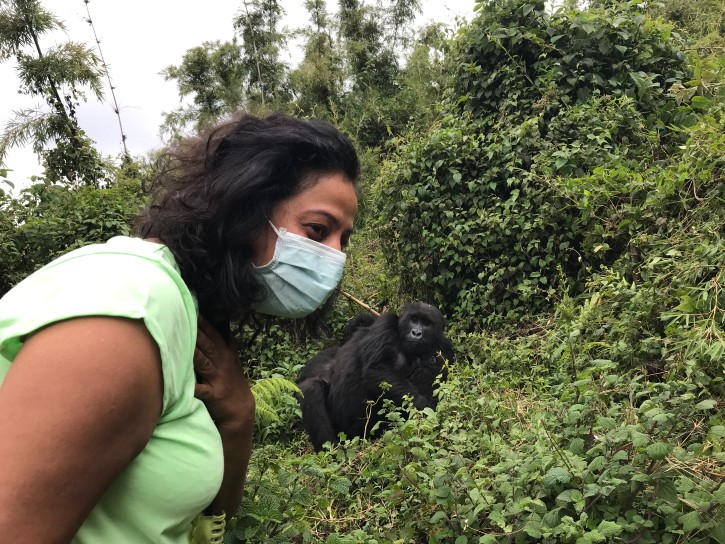
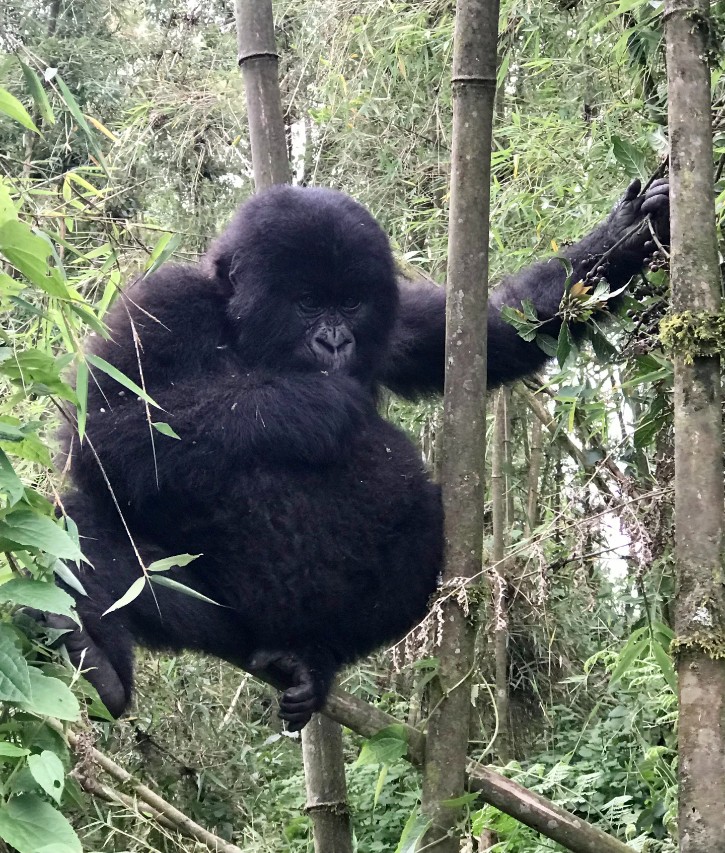
Let me say this. Gorilla trekking is one of the most pleasurable of all activities you can do in Africa. The rush of adrenaline when you see a silverback stretching to his full height, the chest thumping or baby gorillas tugging at your feet is nothing short of emotional. I can’t say I haven’t shed a tear or two myself-and quite unashamedly.
But the big question still remains – at what cost? and where and why.
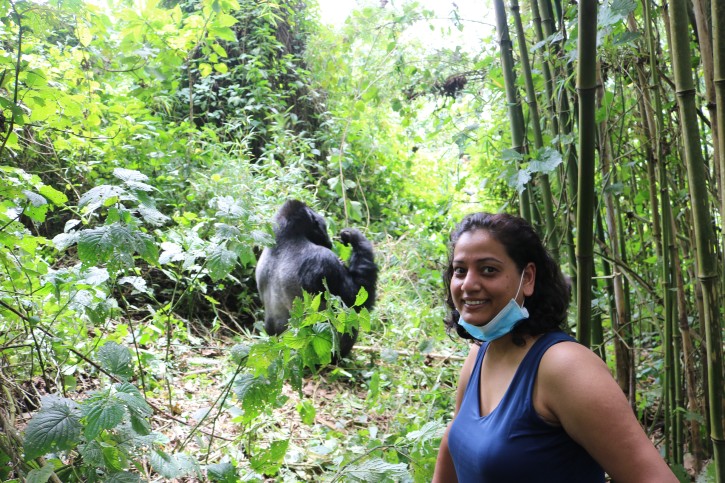
I have had the good fortune of seeing the gorillas in all three countries and there are few things in common – the rules are the same. You get the same amount of time to spend with the gorillas (1 hour). You are required to wear a mask. You are required to remain quiet. You are required to maintain a safe distance.
But no matter where I saw it, the thrill was the same. The flutters in the stomach were the same. And heck, the emotions were the same too.
So, what is the difference?
If you’re trying to choose between Uganda, DRC and Rwanda gorilla trekking, here’s something you should be looking out for.
- The price.
- The accessibility.
- The quality.
Here, I am going to focus on the difference between trekking in three countries, so you can choose what feels right for you.
***Please note that the cost mentioned below is for the trek permits only. Accommodation and travel is calculated separately.
Uganda
Closest airport: Entebbe. The drive from the airport to Bwindi Impenetrable National Park is 9-10 hours.
Price for permit: 800 USD
Distance from airport: 540 kms
Quality: Uganda is cheaper, greener, more rugged, and usually described as ‘adventurous.’ This trek is great for travellers with time on hand and looking for deeper experience.
Rwanda
Closest airport: Kigali. The drive from the airport to Volcanoes National Park takes approximately 3 hours.
Price for permit: 1500 USD
Distance from airport: 115 kms.
Quality: Good for those short on time. You can easily drive up to the national park, trek to see the gorillas and make the late-night flight home.
DR Congo
Closest international airport: Kigali in Rwanda. Alternatively, you can fly into Goma on Ethiopian Airlines or JamboJet, but please check flight updates regularly.
Price for permit: 400 USD
Distance from Kigali airport: Factor in 3.5 to 4 hours to the DRC border, the Gisenyi-Goma border, also called the Grande Barrier. You will need a separate visa to enter DRC. It is recommended to stay overnight in Goma and start the gorilla trek the next morning. The distance from Goma to the Virunga National Park is about 35 kms and due to the poor road conditions, this can take up to 1 hour or more.
Quality: Raw, wild and adventurous. This trek requires ample spare time but offers you a raw experience that can remain with you forever.
Why Rwanda is most expensive?
From what I know and understand (and experienced) – this is a smallish but well maintained with streamlined process. Additionally, this park is a short drive from the airport which makes it particularly appealing to those short on time. Because the park is small, the experience is different. Everything runs smoothly here – this efficiency is the tourist-magnet. Rwanda has managed to position this activity as a luxury activity, and this has worked in its favour.
Is the trekking hard
In every conversation I have had about the trek, the second question I get asked (the first being the price) is the trek to see the gorillas is hard. While there is no one straight answer to this, Rwanda some ends up being the hot favourite simply because it is believed that it is “easier” and DRC the toughest.
This is simply not true.
The trek difficulty depends on where the gorilla family happens to be on that day, the day you choose to trek, the season, your physical health and the section of the trail.
remember, the gorilla families roam free. Their movements are tracked regularly, and your gorilla encounter depends on where they have rested for the night. All my three gorilla treks in three countries involved gentle showers, mud, slippery tracks, elevation gain and humidity.
Nature of the National Parks
Bwindi Impenetrable National Park (a UNESCO World Heritage Site) is a vast rainforest, dense, steep and wild. There is no one central trekking area – the park is divided into multiple sectors, including Buhoma, Rushaga, Ruhija, and Nkuringo. Each sector has its own feel, terrain, and gorilla families.
The Virunga National Park in DRC (a UNESCO World Heritage Site) is remote. Located in the Albertine Rift, certain parts of this park rises to 5000m. This consists of alpine forests, lowland forests and lava fields.
The Volcanoes National Park is smaller, has dense bamboo forests, alpine meadows and rainforest and is the oldest national park in Africa.
However, remember that access to the park, especially the Volcanoes National Park, is easy but this does NOT automatically mean that access to the gorillas is easy. Trekking up to see the gorilla family have pose significant challenges, especially in terms of steepness and terrain.
In all the three National Parks, conservation remains central. The number of trekkers is limited to ensure quality time for the participant. The rangers are well-trained.
NOTE: The trekking permit cost does not include your transportation the park or hotel accommodation.