The rock tombs in Myra are not the only Lycian ruin in Antalya – sure, they are the most popular and photogenic (climb over the acropolis for a birds eye view to see what I mean) – but the honor of most beautiful ruins goes to Kekova.
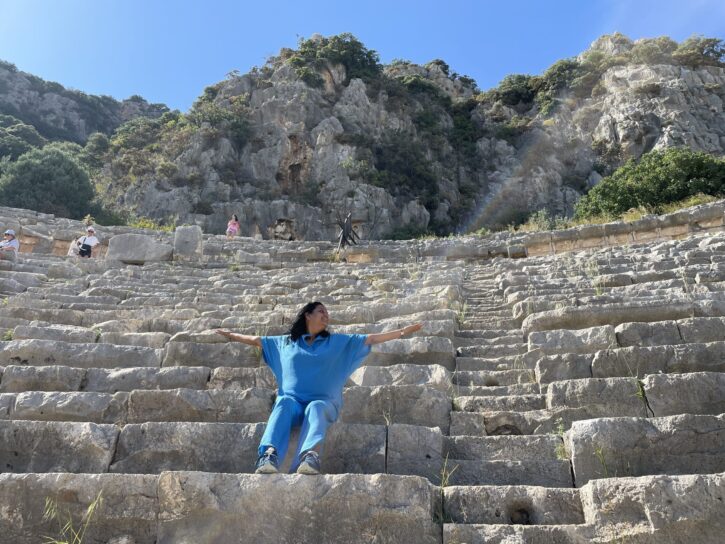
The acropolis in Myra
The Myra tombs are carved into the very hillsides that once stood above the largest city of Lycia. These tombs are fascinating and somewhat spooky (or creepy if you will) but strangely enough, it is believed that a peculiar vibe can be felt here at the city of Myra – the home of St Nicholas. I am not sure if I can even begin to explain that feeling, but it sort you pulls you into it.
I digress.
When the possibility of kayaking over the ruins of a sunken city came knocking, I just had to do it, no matter what. I booked myself a day trip (the best way to reach anywhere in Turkey, if you are not driving, is to take a tour) and promptly arrived at Demre via some spectacularly scenic drive along the coast.
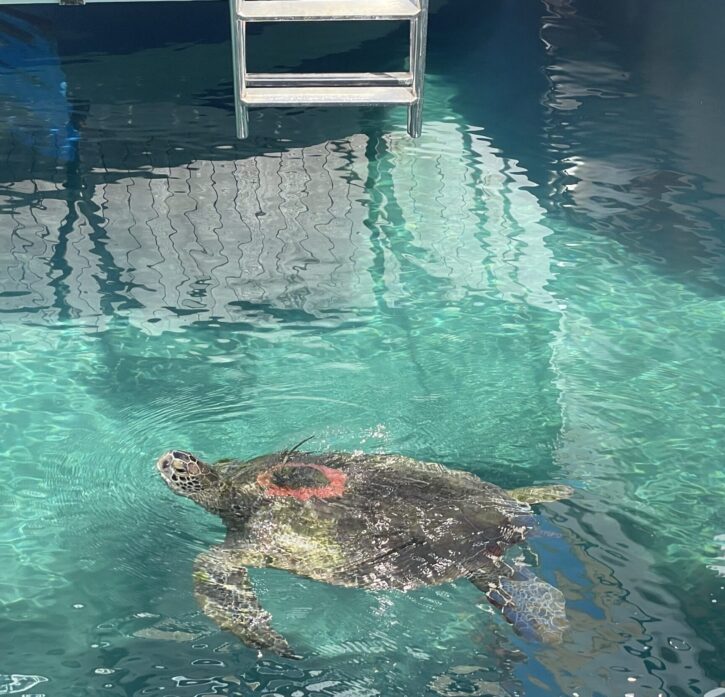
Giant tortoise near the jetty.
Once I started the tour I realized why we had to leave at 7 in the morning. Around 11am the boat tours arrive and you wouldn’t want to bump into a boat while sitting in a kayak.
Cost including lunch: 100TL
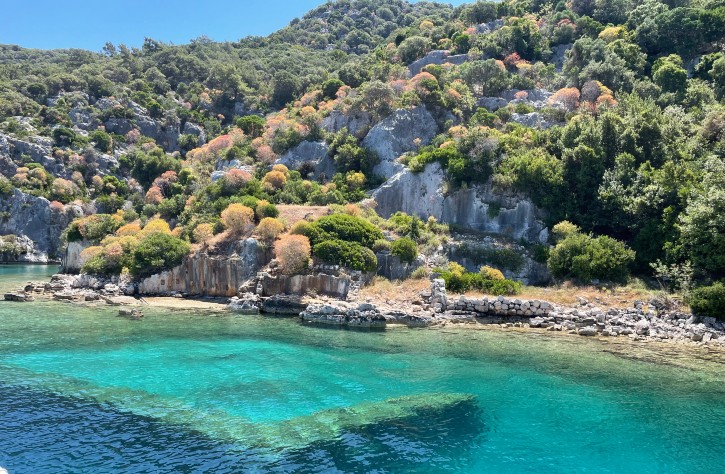
To be honest not that much can be seen of the ruins that sunk under the water after an earthquake, but the scenery is amazing just the same and I’m glad I went.
The boat stopped for people to swim on the island (I refrained from jumping into the icy waters) and contend myself with some hot Turkish tea.
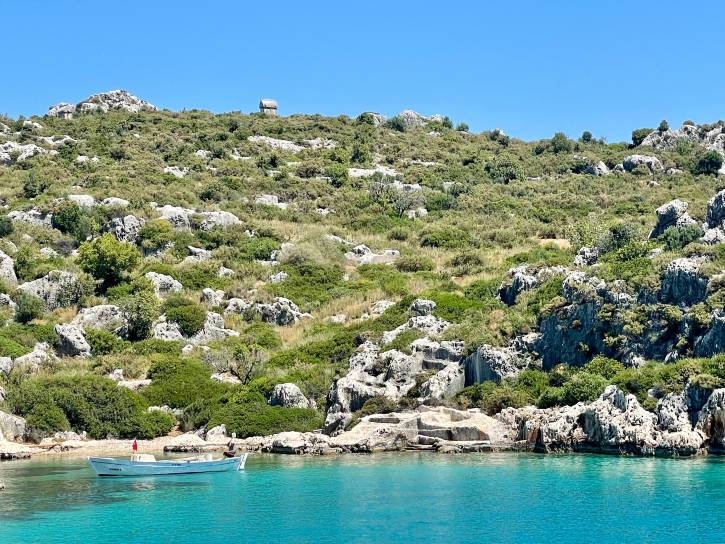
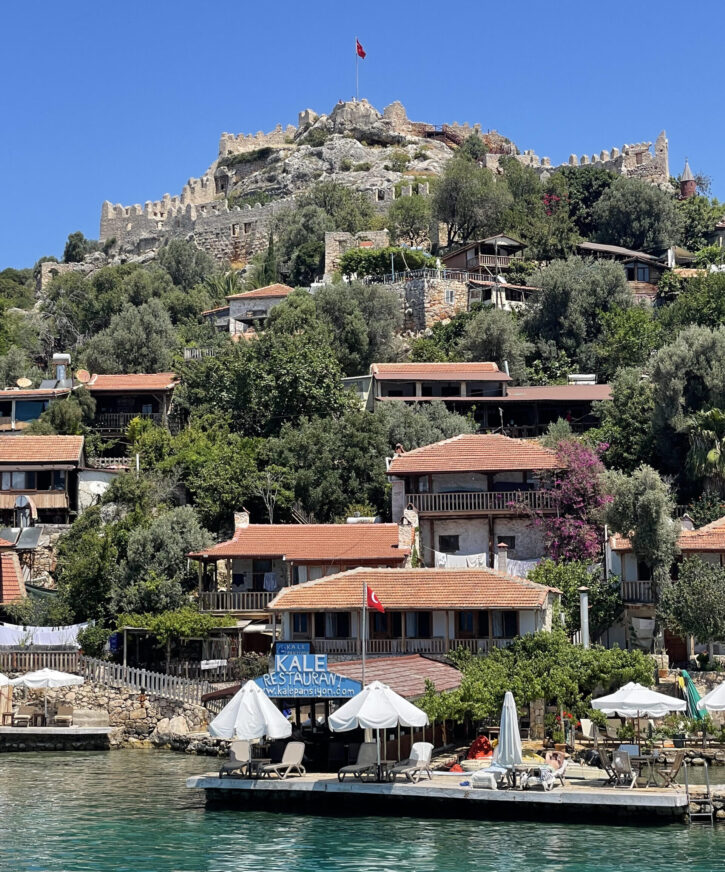
Kekova, in the Mediterranean just across from the village of Kalekoy and its’ Byzantine-era fortress, is a small island where once stood the Lycian town of Dolchiste. It was once an important dockyard and harbor. However, the village was destroyed by an earthquake in the 2nd century and left to ruins for long before being rebuild. It was abandoned again due to piracy. The whole area is now a protected zone now (Scuba divers will call it a shame – there is so much to discover here), but visitors can still reach the shores of Kekova by boat to gaze down into the clear water at the sunken ruins of the city beneath the waves.
Some small reminders of a once thriving habitat still stand above the shoreline of the sunken city, old doorways and crumbling walls that testify to the city that once was. Like so many other civilizations left to decay, a handful of ruins and a collection of legends are all that remain of the Lycian culture.
The Kalekoy settlement
Here are my reasons to visit Kekova –
Enchanting and mysterious
The Kekova Sunken City, or “Batık Kekova,” is an enchanting destination combining rich historical past with present intrigue. Its underwater scenery is mesmerizing – and naturally attracts travellers, history buffs and divers looking for a unique way to spend a holiday. Visitors not only encounter submerged ruins but also get the chance to see a landscape dotted with ancient stairs, water channels etc along with submerged pillars, stone walls and royal tombs and boathouses.
Submerged walls
Echoes of the Past
The legend of the Kekova Sunken City dates back to ancient Lycia. According to local lore, the city of Simena (and its coastal neighbors) gradually sank beneath the sea due to seismic activity or a series of floods, leaving behind remnants that now rest underwater. While some tales recount a perfectly preserved city submerged by divine intervention, archaeological evidence suggests that parts of Kekova’s coastal settlements were indeed engulfed by rising waters over centuries, creating a submerged archaeological treasure.
Historical Significance
Once upon a time, Kekova region was a flourishing part of the Lycian civilization. it was famous for its maritime trade routes and unique rock-carved tombs that still dot the landscape onshore.
Artifacts and ruins found both on land and below the waves provide insights into ancient shipbuilding, trade practices, and daily life along the Lycian coast.
Unique Underwater World
The true allure of Kekova lies beneath the surface. The underwater ruins attract divers from around the world eager to explore submerged relics and vibrant marine ecosystems.
What to Expect
Ruins and Artifacts: Swimmers and divers can encounter remains of ancient harbors, roadways, towers, and tombs that once stood above sea level. These structures, now partially covered by silt and marine growth, give a haunting glimpse into the past.
Marine Life: The crystal-clear waters are home to diverse marine species. Schools of colorful fish, moray eels weaving through rubble, and the occasional curious sea turtle add life and motion to the silent ruins.
Visibility and Conditions: The underwater conditions around Kekova are typically calm with excellent visibility, especially during the summer months when the turquoise waters are at their clearest.
Practical Information for Visiting Kekova Sunken City
The best time to explore Kekova is during the late spring to early autumn months (May to October), when the weather is warm, sea conditions are ideal, and visibility is highest for underwater activities.
How to Get There
Kekova is accessible by boat tours from nearby towns such as Demre, Üçağız, or Çıralı. Most visitors join a day trip that includes kayaking, snorkeling, and stops at historical sites both above and below water.
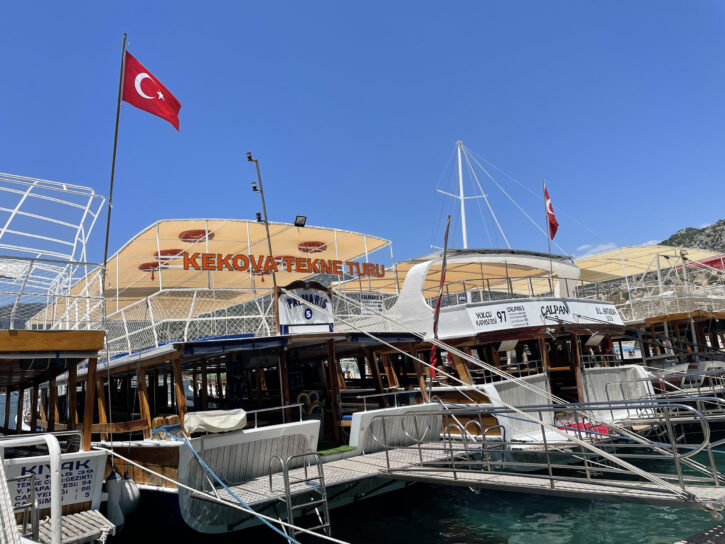
Hire a boat from Demre’s harbour.
Booking a tour
If you are looking to join a tour, you can easily sign up at any agency located here during the day. for a tour with accommodation on the island, an advance reservation is recommended.
To book, you can reach out to the agencies or individual boat tour captains via the internet or Instagram and make reservations in advance. Likewise, there are boat rental options (depending on the number of people).
What to Bring
For Divers: Certification card, dive gear (or rent locally), underwater camera to capture the mysterious ruins.
For Snorkelers/Kayakers: Snorkel set, water shoes, sun protection, and a waterproof camera.
General Tips: Bring cash for small purchases, carry water and snacks, and wear comfortable clothing suited for boat trips and water activities.
Kekova Sunken City isn’t just an underwater attraction – it’s a journey into history that connects mysteries and ancient civilisations. Exploring its ruins—whether by diving, snorkeling, kayaking, or simply admiring from a boat—offers more than just sights to behold; it provides stories to live and share.