
The Everest Base Camp trek (EBC Trek) is among the most iconic adventure treks in the world. This trek involves walking through breathtaking landscapes, tests your physical endurance, and bonding with nature and culture. EBC stands at the foot of the world’s highest mountain, Mount Everest, and possesses a charm and appeal no other treks do.
While the thought of EBC Trek may make you rush to it, it is important to know that it is NOT easy. It takes months of preparation, physical and mental to face this challenge.
The classic EBC route
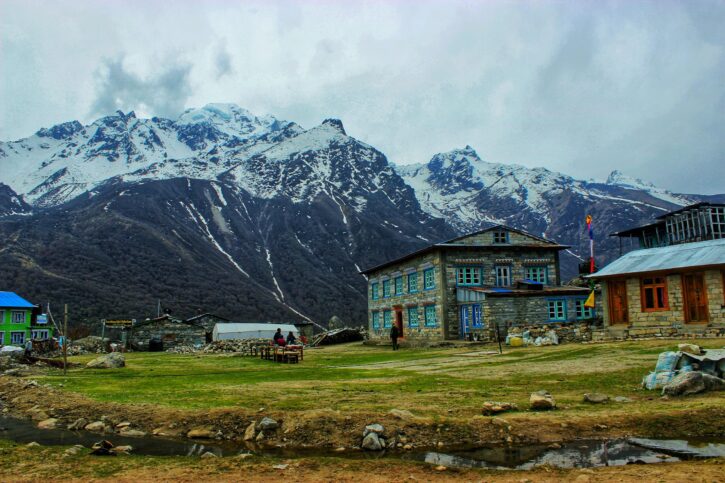
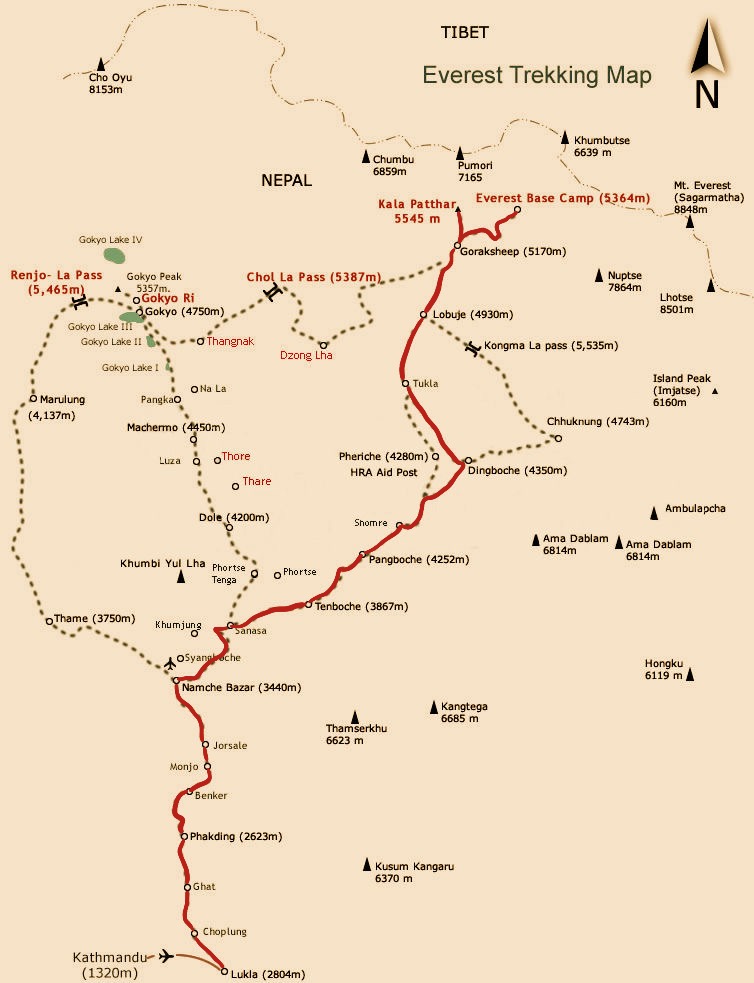
This route is the most popular route, starting from Lukla and going straight to the Everest Base Camp along a valley, and then returns the same way. On this trek, you will get the full view of snowy mountains and glaciers and be able to see 4 Himalayan peaks above 8000 meters up close, including Mt Everest, Lhotse, Makalu, and Cho Oyu, which ranked first, fourth, fifth, and sixth in the world respectively. The main attractions are the Gorek Shep (5164 meters), the Everest Base Camp (EBC at 5364 meters) and Kala Patthar (5550 meters) observation deck. This route is also a classic tea house trekking route. There are villages or rest stations every 1 or 2 hours along the way, so you don’t need to bring your own food and camping facilities, and the difficulty is greatly reduced.
The biggest difficulty of this route is the long duration and high altitude, with big ascends of some individual sections and complicated road conditions.
This is how a typical EBC route itinerary looks like.
Day 1: Arrival in Kathmandu (1400m)
Day 2: Flight from Kathmandu or Ramechhap to Lukla (2840m), by plane Then Trek to Phakding (2610m)
Day 3: Trek from Phakding to Namche Bazaar (3440m)
Day 4: Acclimatization Day in Namche Bazar (3440m)
Day 5: Trek from Namche Bazar (3440m) to Tengboche (3810m)
Day 6: Trek from Tengboche (3810m) to Dingboche (4410m)
Day 7: Acclimatization Day in Dingboche (4410m)
Day 8: Trek from Dingboche (4410m) to Lobuche (4910m)
Day 9: Trek from Lobuche (4910m) to Gorakshep (5140m) then Everest Base Camp (5364m) and back to Gorakshep (5140m)
Day 10: Trek from Gorakshep (5140m) to Kalapatthar (5,644 m) then Pangboche (3930m)
Day 11: Trek from Pangboche (3930m) to Namche Bazaar (3440m)
Day 12: Trek from Namche Bazaar (3440m) to Lukla (2840m)
Day 13: Flight back to Kathmandu from Lukla or Ramechhap by plane and drive to hotel
Day 14: Final Departure. End of trip.
Physical fitness and training
Let me put it out there – The Everest Base Camp Trek is not an easy task. You should be physically fit to do this particular trek. The trek is a challenging life achievement but can be done with the right amount of preparation and training.
Physical fitness is the first requirement – meaning you should be capable of walking 6-7 hours a day on average. You must prepare your body to withstand the long hours of walking. If you are an experienced trekker or hiker, you should be okay with your normal hike preparation, but if you are a newbie or a first-timer, you may want to take some fitness training. Train atleast SIX months before your trek.
Mental preparation
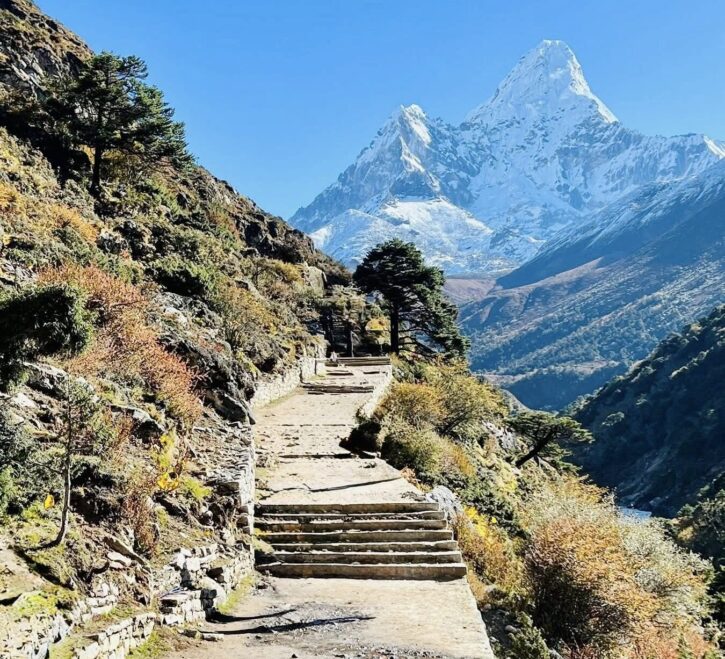
Apart from the physical training and preparation, it is important to prepare for this trek mentally. This trek is not to be taken lightly. The 14-day trek is insane – its tough, it will make you question your choices, make you want to give up. It will take you through the cold climate, the remote villages, uphills, and downhills, and places different from what you are used to.
Remember that you are signing up for not only the beautiful scenarios and exquisite cuisine, you are also signing up to overcome all obstacles to achieving this glorious moment of reaching the Everest Base Camp. Prepare yourself to battle cold, days of no internet (this however is changing now) and lack of amenities you are used to.
Acclimatization
Study your itinerary well before you ascend to your destination. Your trek operator always includes proper acclimatization points and stops, bit if you hike solo, make proper acclimatization stops so you don’t face altitude sickness.
Everest Base camp trek is at a high altitude, which means there is every chance of altitude sickness. So, choose your stops carefully. Most treks make a stop at Namche Bazaar and at Dingboche to acclimatize. Take it seriously
Hiking training
Hiking training is another requirement of Everest Base Camp Trek preparation. Being located at an altitude of 5364 meters, the trail is mostly uphill up to the base camp. So you should get some hiking training and experience.
It would be helpful for you to climb or hike some small treks before going straight for Everest Base Camp Trek. You can try to accustom yourself to the trek by doing small hikes or legwork exercises so you don’t get cramps on the way to Everest Base Camp.
Cardio training
Cardio training also helps you boost your stamina and skills to achieve your Everest Base Camp goal. This is one of the major requirements of the Everest Base Camp Trek preparation. Cardio training, like running, swimming, cycling etc helps you build your stamina and makes your muscles strong enough to endure the challenges.
Walking uphill for 6-7 hours daily is very challenging for your body. Your body should be used to this intense walking schedule.
Newbies’ most common issue is muscle cramps while walking for too long, especially hiking. To avoid such situations, try to keep up your cardio training. To successfully prepare for the Everest Base Camp trek and its intense routes, you should start your cardio workout 6 months before the trek.
Best time to trek
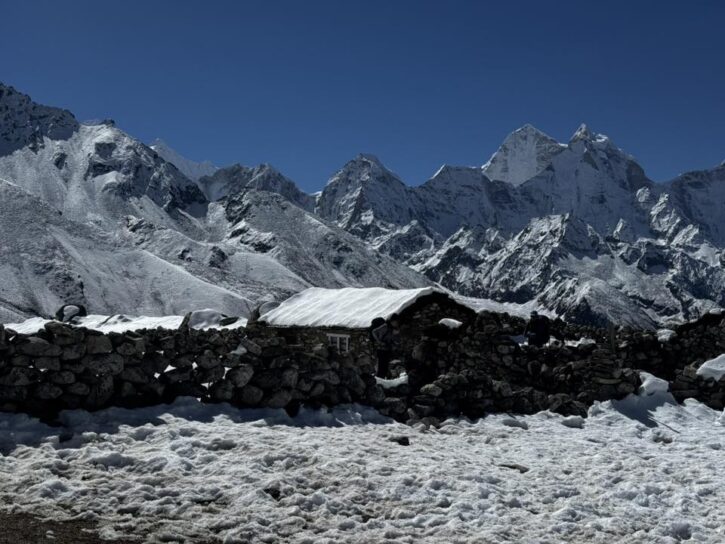
For a first-timer, trekking in autumn or spring season is recommended. During these times, you can enjoy the view while having to carry less stuff and not having to face the harsh winter face front.
The best time to venture on the Everest Base Camp trek is February to April and October to December. If you want clear views, you should trek during March, April, and October.
If you are not experienced and don’t want any complications, avoid rainy seasons like July and August. The lower roads will be slippery during the rainy seasons. Spring and autumn is the best time.
However, if you want to experience the trek without any crowds, you should visit the place during the off-season. Like July or January, the trails aren’t as crowded in the off-season. However, you will probably have to walk in the rains (not at all a pleasant experience in my opinion) but the tea houses will mostly be empty (Plus point).
Packing the essentials
Packing the right gear is an absolute must for this trek. Your preparation mostly includes the things you must take on the trip. Everest Base Camp Trek takes you through 14 days of walking 6-7 hours a day on average. So, the clothes and shoes paly a very important role in this preparation. It is said you can compromise on anything but your trekking shoes!
Clothing
What you pack for your clothing highly depends on which time of the year you are making the trek. Everest Base Camp Trek preparation in the summer, spring, or autumn requires lightweight clothes. You can wear light clothes in the summer, spring, and autumn. The clothes you wear and carry should be lightweight. Also, make sure your clothing is quick-drying. NEVER wear cotton. Why? The long walks make you sweat, and cotton absorbs your sweat but remains wet, which may result in you catching a cold. So make sure to bring quick-drying clothes. Cotton is a strict no-no here.
Packing smart is important since you’ll be hiking in different weather conditions, from sunny days to freezing nights. Layering is key here. Eg, start with a moisture-wicking base layer, followed by an insulating mid-layer (like fleece or down), and top it off with a windproof and waterproof outer shell.
*** When traveling during the winter season, bring warm layers of clothes. Don’t forget to bring a waterproof jacket and trousers just in case. Also note that most trek operators provide you with a down jacket and bags (that your porter will carry). in a worst case scenario, if you have missed something, you can find a few items in Namche Bazaar too.
Footwear
You will walk 6-7 hours daily, which means your shoes must be durable and comfortable. Carry 4-5 pairs of hiking socks, high-quality, mid to high ankle trekking shoes (Goretex) and hiking shoes for lower altitude.
Miscellaneous
Other than your basic clothes and footwear, you should carry other things with you. These include –
- 10 ltrs backpack (your day pack)
- Map
- Toiletries
- Extra battery
- Cameras
- Sunscreen
- First aid kit
Guide/ Porter
Your trek operator provides both the guide and the porter as part of the trek package. Each porter carries up to 30 kgs (15 kgs for each trekker) weight, going from camp to camp. However, if you are going solo, it would be best if you also considered hiring a porter for the trek along with a guide. Your guide might agree to carry some of your luggage, but hiring a porter and guide makes your trek easier and more enjoyable. Make sure your porter and your guide understand your language correctly. You should be able to communicate with your guide in case of emergencies.
Tips for Everest Base Camp Trek Preparation
- Make sure you do not have any illness or medical condition that may obstruct your trek by taking a medical examination before the trek.
- Carry your medicines for the common cold and other basic medicines
- Prepare yourself physically and mentally for the trek
- Try not to rush yourself through the trek. Take proper acclimatization days to avoid any altitude sickness
- Alwayscarry your permits with you so you are not charged with trespassing
- The views of Mt.Everest are stunning and much as you want to, you cannot fly a drone here. Flying drones without permission is considered illegal in Nepal.
- Do not pollute the environment while you are trekking. Bring back your trash or dispose them in designated places. Donot litter.
- Be polite and courteous to the locals – especially at your tea houses.